


Lighting ramps
Bring compatible 24 V LED lighting up in the morning and down at dusk.
 Illustrative ecosystem concept
Home Ecosystems Controller
Controller brings the environmental intelligence of Mini together with eight integrated 24 V DC outputs. Connect suitable low-voltage equipment directly, then coordinate it with sensors, supported smart devices, weather and natural daily patterns.
Choose Controller when you are building an ecosystem around lighting, rain, mist, water movement and ventilation that you want to control at the source.
What makes Controller different
Each onboard channel independently switches suitable 24 V DC equipment. Compatible variable/PWM loads can also follow changing output levels, so many builds need fewer separate smart actuators.
Examples show channel roles, not a fixed wiring plan. Match every load to the output voltage, current, power and electrical characteristics.
More than on and off
Compatible lighting can brighten gradually. A suitable variable/PWM pump can change flow or rainfall intensity. Each output can follow its own configured pattern.
Bring compatible 24 V LED lighting up in the morning and down at dusk.
Vary a compatible pump's output where its electrical design supports PWM control; otherwise use appropriate on/off switching.
Not every 24 V device supports dimming or variable speed. Select equipment and wiring for its voltage, current, power and control method.
Ecosystem intelligence
Let light, temperature and humidity targets evolve through the day rather than remain static.
Adapt day length and environmental behaviour as the year changes.
Use relevant temperature, humidity, light, sunrise, sunset and hourly weather information as inputs.
Bring sensor readings into local rules for heating, cooling, lighting, rain and ventilation.
Combine onboard outputs, supported Wi-Fi equipment, Bluetooth sensors, scenes and safeguards.
Essential schedules and automations continue on the Controller when internet access is unavailable.
Software limits and alerts complement appropriate independent electrical and thermal safety equipment.
Home Ecosystems app
See current conditions and sensor values, check equipment status, manage your ecosystem and adjust compatible devices. Build schedules and natural patterns, and receive alerts you have configured.
Controller remains in control. Essential automation runs locally on the controller. Remote monitoring and control are available through the app when the controller, account and network are configured for remote access; cloud features need an internet connection.
Get the Home Ecosystems app


Natural automation
Lighting, climate and a suitable direct-output rain pump can each follow their own pattern or respond to configured conditions.
| Environmental target | 06:00 | 12:00 | 18:00 | 00:00 |
|---|---|---|---|---|
| Light intensity | 10% | 90% | 30% | 0% |
| Temperature | 20°C | 26°C | 23°C | 19°C |
| Humidity | 80% | 65% | 75% | 85% |
| Rain pump output | 0% | 0% | 50% | 0% |
Values are illustrative automation examples, not animal-care recommendations. Variable rain output requires a compatible pump.
Getting started
Choose an appropriate 24 V supply and electrically compatible load for one output.
Bring supported sensors and smart devices into the same ecosystem.
Check manual control, then test a local schedule or sensor rule before expanding.
Technical specifications
Never connect mains AC equipment or a 5 V USB device directly to a 24 V output.
An appropriate 24 V-to-5 V adapter can let a Controller output switch suitable 5 V USB equipment, such as a small fan. The Controller supplies 24 V to the adapter; the adapter performs the voltage conversion. Never connect USB equipment directly to the 24 V output.
Two ways to connect
Connect suitable 24 V equipment through onboard outputs. Add supported smart devices when you need wireless sensing or mains switching.
Compatible LED lighting, circulation or rain pumps, misting equipment and suitable ventilation can connect to onboard channels. Electrical compatibility and total power limits determine the fit. A generic compatible 24 V rain system can be switched directly; variable rainfall needs a pump designed for variable/PWM control.
Use the exact-model directory to choose qualified sensors, lighting and switches. Each card explains its current functions, limits and setup path.
Other BTHome and Shelly Gen3/Gen4 devices may work but need their own qualification.
Explore the Supported Devices directoryIn practice
 Illustrative ecosystem concept
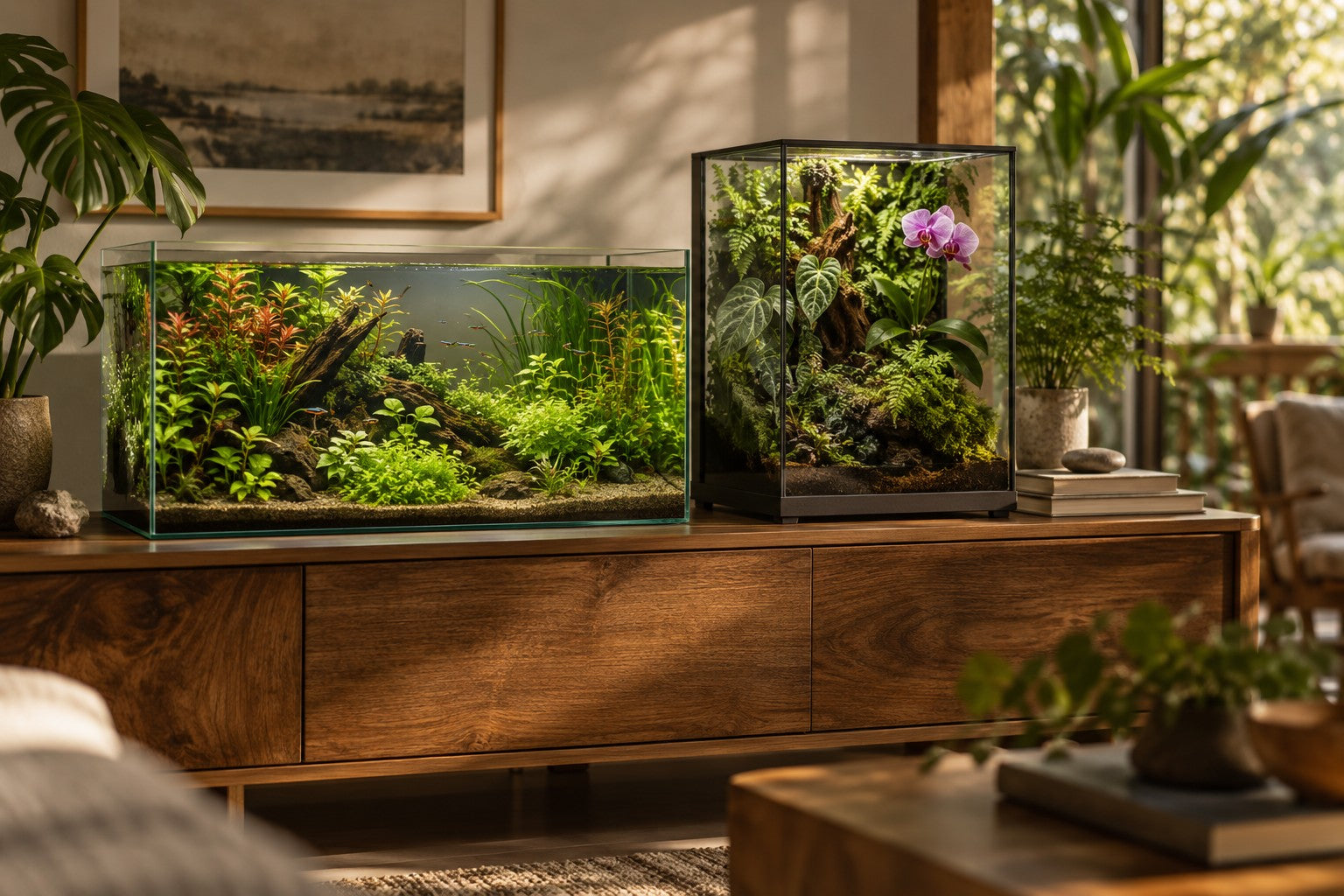
Rainforest paludarium
Light ramps up, environmental targets change, and rain, mist, water movement and ventilation each follow their configured role. Weather and seasonal information can influence the pattern.
Two Shelly BLU H&T sensors can monitor upper and lower zones; one Xiaomi Mi Flower Care can monitor the planted area. These three sensors fit the Controller's stated Bluetooth capacity.
 Illustrative ecosystem concept
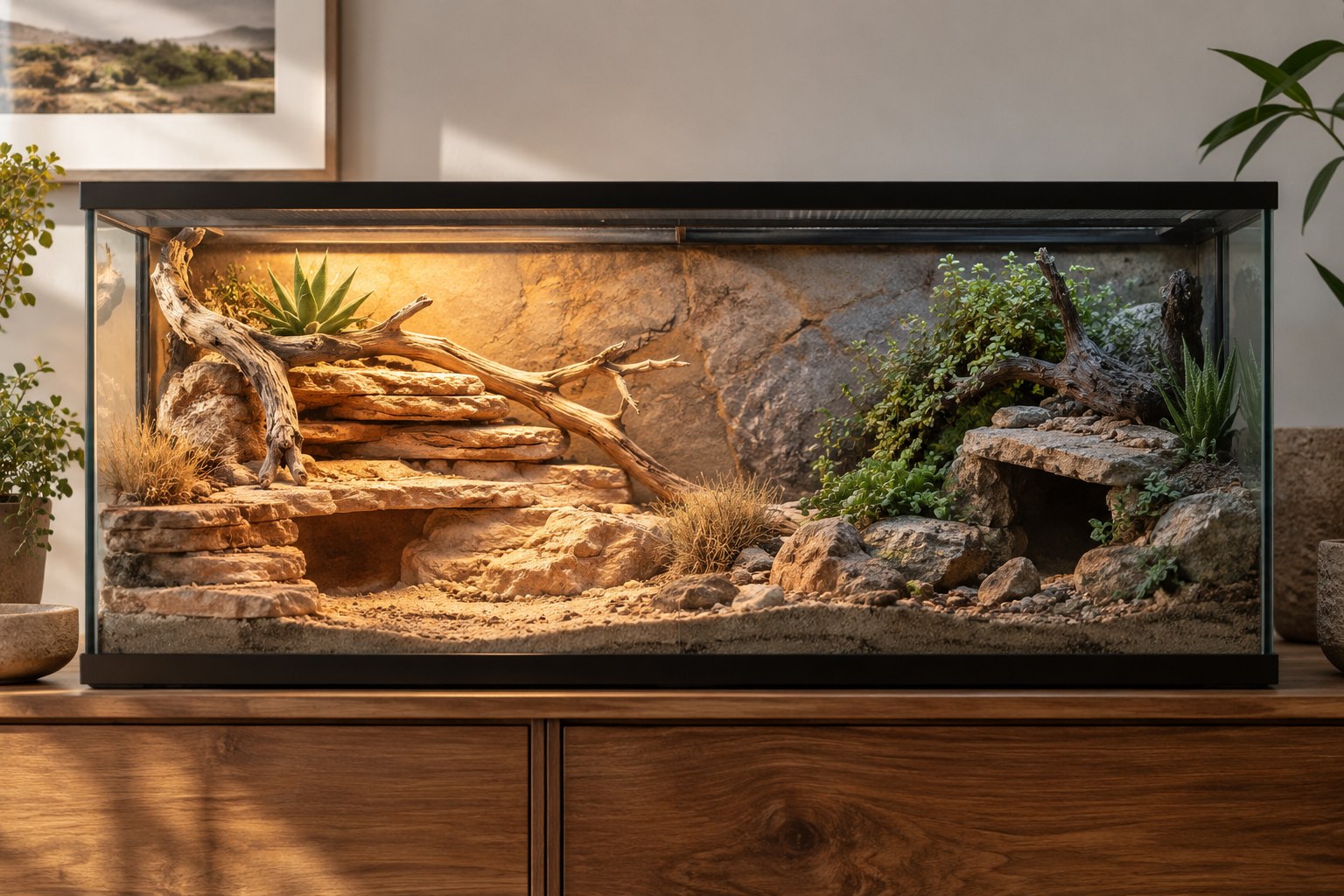
Seasonal terrarium
Connect compatible low-voltage lighting and ventilation to the onboard outputs. A supported Shelly plug can switch suitable mains-powered basking equipment, while separate measurements monitor warm and cool zones.
Day length and targets can change gradually through the seasons. Equipment ratings and independent safety protection remain part of the installation design.
These are illustrative automation examples, not species-specific husbandry recommendations or fixed equipment plans.
Find your fit
Choose Mini to coordinate an ecosystem built mainly around supported smart equipment. Choose Controller to connect compatible 24 V lighting, pumps, rain, mist and other low-voltage equipment directly.
| Capability | Controller Mini | Controller |
|---|---|---|
| Local automation and natural patterns | Yes | Yes |
| Weather and seasonal adaptation | Yes | Yes |
| Home Ecosystems app | Yes | Yes |
| Wi-Fi devices | Up to 6 | Up to 6 |
| Bluetooth sensors | Up to 2 | Up to 3 |
| Direct 24 V outputs | — | 8 |
| Combined direct output | — | Up to 240 W |
| Maximum controllable channels | Up to 24 | Up to 32 |
Support and updates
Online guidance and practical tutorials help you connect equipment and build automations. Software updates can add completed device integrations and new capabilities, including planned connections to future Home Ecosystems products such as Smart Node.
Open Getting StartedHome Ecosystems Controller
Eight onboard channels, supported smart devices and local intelligence working together.